No Service Without Bribes at BRTA


 May 12, 2026 2:40 pm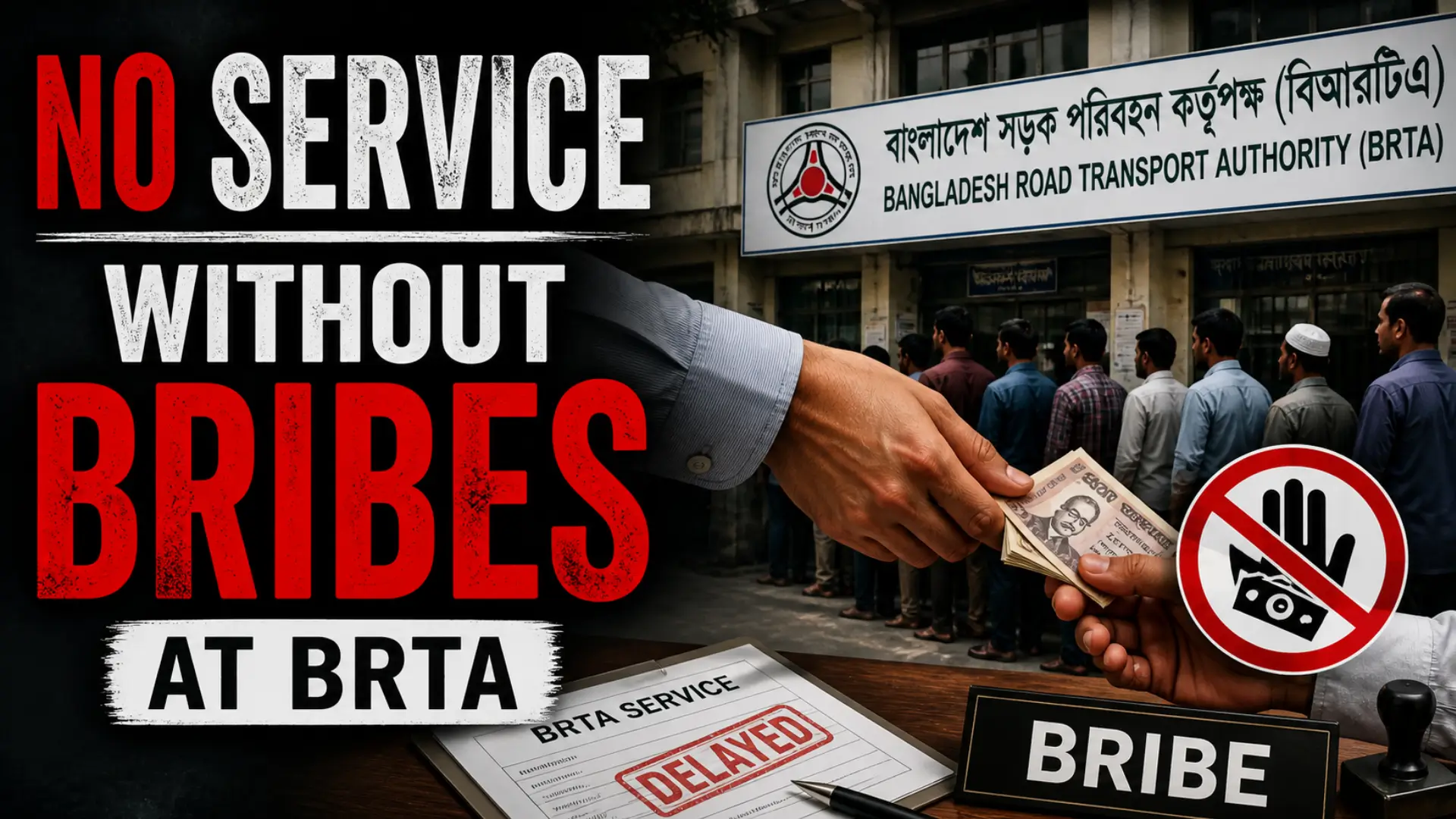
No Service Without Bribes. Corruption continues to plague various offices of the Bangladesh Road Transport Authority (BRTA), leaving ordinary citizens frustrated and helpless. Reports reveal that without paying bribes, many service seekers are forced to wait for months or even years to complete basic procedures. Despite government efforts to digitize services and reduce harassment, bribery and broker syndicates remain deeply rooted in the system.
Bribery Still Common in BRTA Offices
Across multiple BRTA offices, bribery has become a routine practice. Service seekers report that official processes often move extremely slowly unless extra money is paid. As a result, many individuals feel compelled to offer bribes just to avoid unnecessary delays and harassment.
Investigations highlight that this issue is not limited to one location but is widespread across different regions. Offices in Savar, Ekuria, Barishal division, Feni, Noakhali, Narsingdi, Cox’s Bazar, and Lakshmipur have all been linked to high levels of corruption.
Role of Broker Syndicates
One of the major reasons behind ongoing corruption is the active presence of broker syndicates. These groups operate openly within and around BRTA offices, acting as middlemen between officials and service seekers.
Savar BRTA Office
In the Savar BRTA office, a powerful syndicate reportedly controls most services. The group is said to be led by Maksuda Sultana and her brother Plabon Rahman. They allegedly manage a network of around 12 brokers who handle everything from driving licenses to vehicle registrations.
These brokers often sit inside the office, use official desks, and even operate government computers. They demand extra money for each service, ensuring faster processing for those who are willing to pay.
Ekuria BRTA Office
Similar activities have been reported in the Ekuria office in Keraniganj. Here, brokers operate near the main gate, often through nearby computer and photocopy shops. They charge additional fees for services that are officially available online.
Customers claim that brokers in Ekuria have become increasingly aggressive and, in some cases, even threaten applicants who refuse to pay.
Impact of Anti-Corruption Efforts
The Anti-Corruption Commission (ACC) has conducted several drives to curb illegal activities in BRTA offices. However, these efforts have had only temporary effects. Brokers tend to disappear for a few days during raids but quickly return to their usual operations afterward.
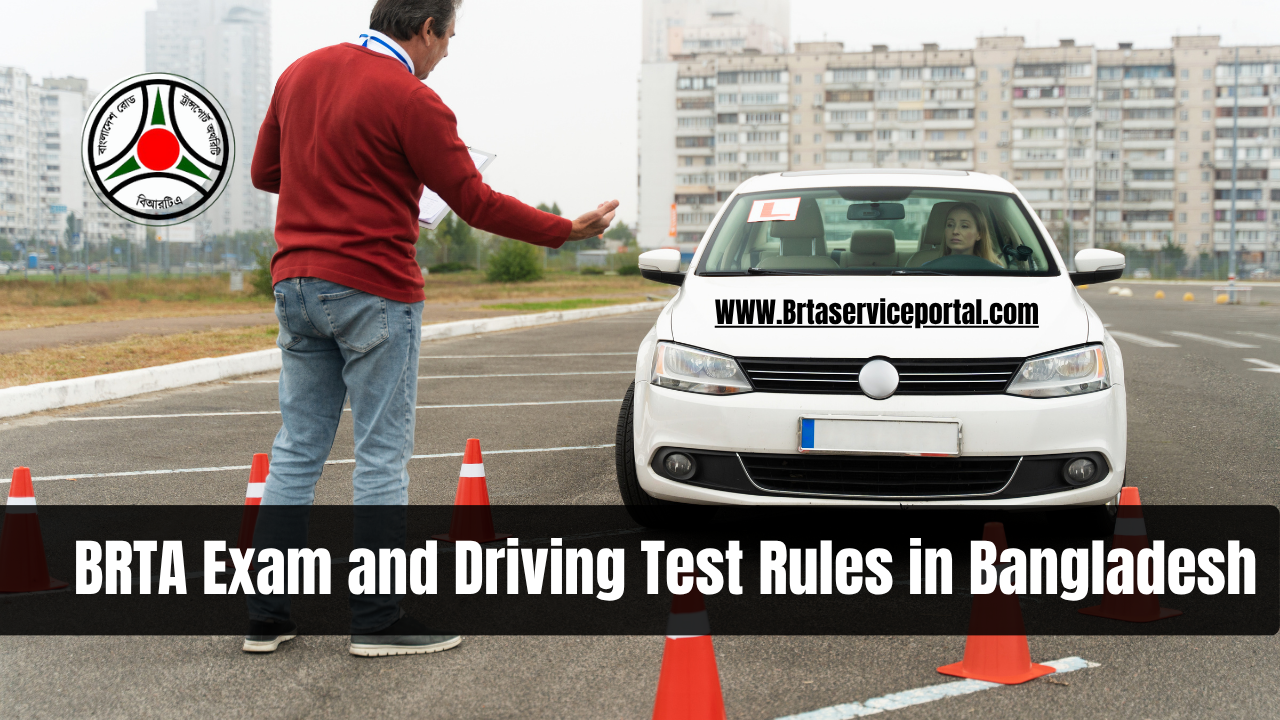
For example, during a raid in January 2025, authorities found evidence of driving licenses being issued without proper testing. Despite such findings, the system continues to function with minimal long-term change.
Online Services Fail to Solve the Problem
BRTA headquarters has introduced 18 online services, including applications for driving licenses, in an attempt to reduce corruption and make processes more transparent. However, the ground reality tells a different story.
Many applicants still rely on brokers because online systems are either difficult to navigate or intentionally delayed. Brokers take advantage of this gap, offering “quick solutions” in exchange for extra money.
Experiences of Service Seekers
The experiences of ordinary citizens highlight the severity of the problem. Many individuals report facing repeated delays, missing documents, and unnecessary complications when they try to complete procedures without paying bribes.
Real-Life Complaints
One expatriate, Ehsan Ullah, shared that he spent 15 days trying to obtain a driving license during his short leave but failed because he refused to pay a bribe. Similarly, another customer, Nazmul Alam, claimed his documents were lost, forcing him to restart the process multiple times.
Others have reported that even basic services like vehicle fitness checks require long waiting hours unless unofficial payments are made.
How the Bribery System Works
The bribery system in BRTA offices appears to be well-organized. Brokers collect payments ranging from Tk 1,500 to Tk 4,000 depending on the service. Files that include bribe payments are sometimes marked with special symbols to ensure quick approval.
In some cases, officials are also accused of being directly involved. Allegations suggest that certain staff members collaborate with brokers to process applications faster in exchange for a share of the bribe.
Additionally, there are claims that driving licenses are issued without proper tests, and applicants can pass exams simply by paying extra money.
Staff Shortage and Weak Oversight
Another contributing factor to corruption is the shortage of staff and lack of proper supervision. For instance, the Savar office reportedly has only three government officials, and the head visits just twice a week.
This limited oversight creates an environment where broker syndicates can operate freely without fear of strict action.
Official Response
BRTA officials have denied allegations of bribery and corruption. They claim that strict action will be taken if concrete evidence is provided. However, the persistence of such practices suggests that enforcement remains weak.

Despite repeated complaints and media reports, there has been little visible improvement in the overall system.
Conclusion
The ongoing corruption in BRTA offices highlights a serious challenge for governance and public service delivery in Bangladesh. While digital initiatives and anti-corruption drives are steps in the right direction, they have not been enough to eliminate deeply rooted bribery practices.
For meaningful change, stronger enforcement, increased transparency, and better monitoring systems are essential. Until then, ordinary citizens will continue to suffer, forced to choose between long delays and paying bribes for services that should be accessible without corruption.