AI Traffic Fine Scam Raises Questions About BRTA and Road Safety System

 August 2, 2026 10:28 am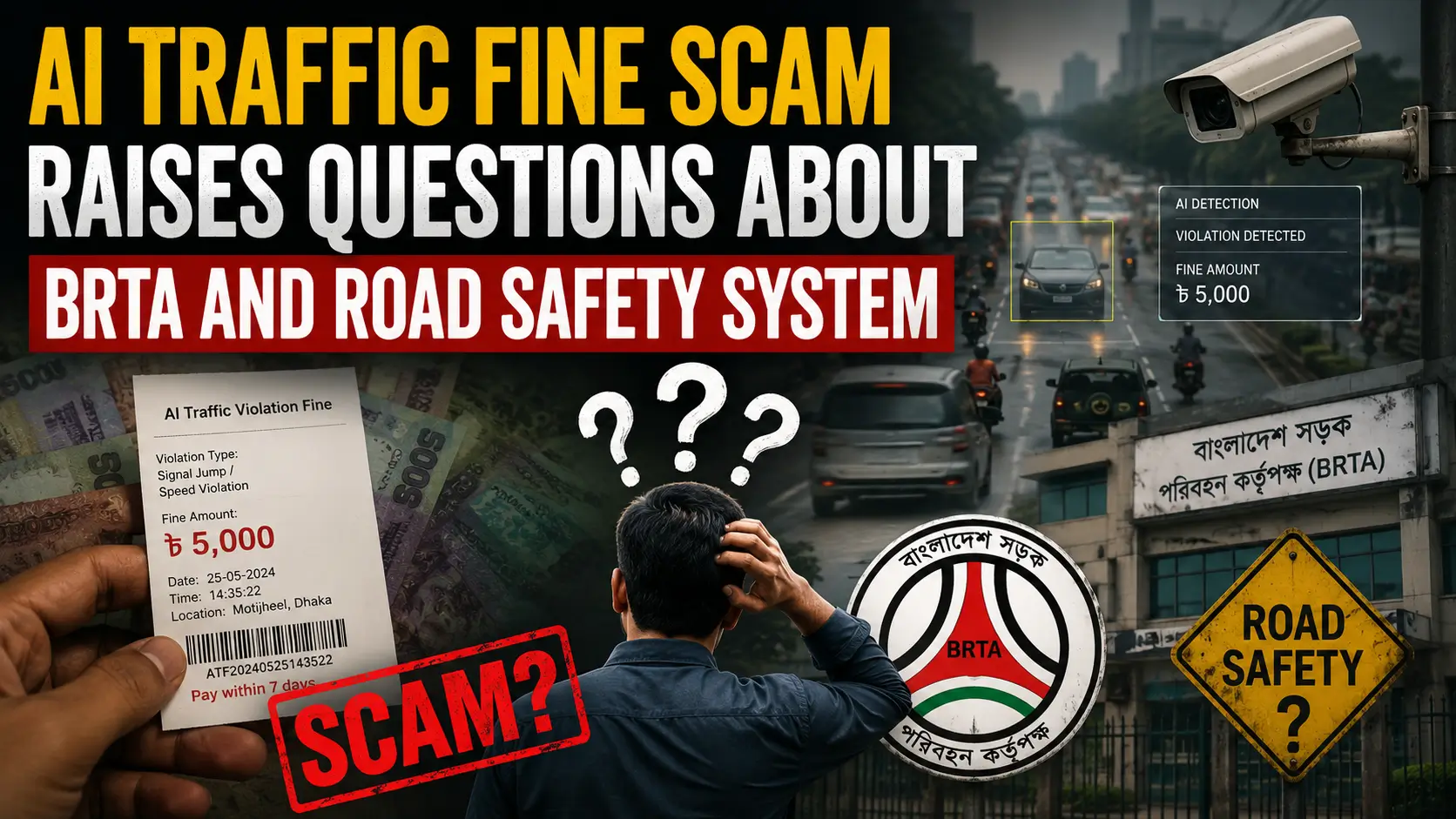
AI Traffic Fine Scam Raises. The introduction of Artificial Intelligence (AI)-based traffic monitoring and automated fine systems was expected to improve road discipline and reduce traffic violations in Dhaka. By using smart surveillance technology, authorities aimed to identify offenders automatically and issue fines without direct human intervention. However, concerns have recently emerged over fraudulent activities linked to the new system, raising questions about data security and the effectiveness of oversight by the authorities.
Reports suggest that scammers are taking advantage of public awareness about the AI traffic enforcement system by sending fake SMS notifications to vehicle owners. These messages claim that recipients have outstanding traffic fines and urge them to make payments through fraudulent websites designed to resemble official government platforms.
AI-Based Traffic Enforcement System in Dhaka
The AI-powered traffic surveillance system was introduced on a trial basis at several major intersections across Dhaka on May 7, 2026. The technology automatically detects traffic violations, captures evidence through cameras, and generates digital case notices against offenders.
Under the system, drivers who violate traffic rules receive notifications regarding their offenses and fines. Payments can also be completed online, making the process faster and more convenient for both motorists and traffic authorities.
Officials believe the technology can help improve road discipline by ensuring that violations are detected consistently and penalties are issued without human bias.
Fraudsters Exploit Public Awareness
While the system has been praised for its technological advancement, cybercriminals have quickly found ways to exploit it.
According to reports, fraudsters are sending fake SMS messages labeled as “Final Notice Regarding Fine Payment.” These messages warn recipients that they must pay a traffic fine before a specified deadline. The SMS often includes a suspicious link directing users to websites that closely resemble official government portals.
Unsuspecting vehicle owners may believe the notices are legitimate and proceed to enter personal information or make payments, resulting in financial losses and potential exposure of sensitive data.
Victims Share Their Experiences
Several motorists have reported receiving suspicious messages despite having committed no traffic violations.
One victim explained that he had not used his motorcycle for over a week but still received an SMS claiming he had an unpaid traffic fine. The message stated that the payment deadline was the same day, creating urgency and pressure to act immediately.
After investigating the website linked in the message, the individual noticed that it looked remarkably similar to the official BRTA platform, making it difficult for ordinary users to identify the fraud.

Another victim questioned how the scammers obtained access to contact information associated with driving licenses. According to the victim, the messages appeared to target individuals who possess BRTA-issued licenses, leading some citizens to wonder whether personal information may have been exposed through unauthorized channels.
Concerns Over Data Security
The emergence of these scams has triggered broader concerns regarding data protection and cybersecurity.
Many citizens are questioning how fraudsters gained access to information that allowed them to target licensed drivers so effectively. While there is currently no evidence of any official data breach, the situation has intensified public demands for stronger safeguards around personal information maintained by government agencies.
Cybersecurity specialists emphasize that whenever a new digital service is introduced, protecting user data must be treated as a top priority. Without strong security measures, criminals may exploit public trust in government systems.
Traffic Police Clarify Official SMS Procedure
In response to the growing concerns, officials from the Dhaka Metropolitan Police (DMP) Traffic Department have urged the public to remain cautious.

Authorities stated that legitimate traffic fine notifications will only be sent from officially designated numbers. They warned citizens not to trust messages originating from unknown local or foreign numbers and advised motorists to verify any notification through official channels before making payments.
Officials also emphasized that numerous fake messages currently circulating on social media and mobile networks are entirely fraudulent and should be ignored.
The DMP has encouraged citizens to report suspicious messages and avoid clicking on links received from unverified sources.
Cyber Experts Call for Stronger Action
Despite the assurances provided by authorities, cybersecurity experts believe more proactive measures are necessary.
Experts argue that identifying and dismantling the criminal networks behind these scams should be a high priority. They stress that public warnings alone are not enough to stop fraudsters who continuously adapt their tactics.

Cybersecurity analyst Tanvir Hasan Joha has called for a comprehensive investigation into the handling of user information and system security. According to experts, authorities should examine whether any vulnerabilities exist within the systems used to manage vehicle registration, tax token records, or driving license information.
Specialists also recommend implementing advanced security mechanisms that can automatically detect and block fraudulent messages attempting to impersonate government agencies.
Impact on Public Confidence
The success of AI-powered traffic enforcement depends heavily on public trust. While the technology has the potential to improve road safety and ensure fair enforcement of traffic laws, incidents involving fraud can undermine confidence in the entire system.
Many motorists may become hesitant to respond to legitimate notices if they fear being targeted by scammers. This could create additional challenges for authorities attempting to modernize traffic management through digital solutions.
Building trust will require transparent communication, stronger cybersecurity protections, and swift action against those responsible for fraudulent activities.
More Than 2,000 Cases Already Filed
Since the experimental launch of AI traffic monitoring in May 2026, authorities have reportedly filed more than 2,000 traffic violation cases through the automated system.
The early results demonstrate the technology’s ability to identify and penalize traffic offenses efficiently. However, the rise of related scams highlights the importance of ensuring that technological innovation is accompanied by effective security measures.
Conclusion
The introduction of AI-based traffic surveillance marks a significant step toward modernizing traffic enforcement in Bangladesh. However, the recent wave of fake fine-payment messages has exposed vulnerabilities that require immediate attention.
Authorities, cybersecurity experts, and government agencies must work together to combat fraud, protect personal information, and maintain public confidence in digital services. As AI technology becomes more widely used in public administration, ensuring security and transparency will be just as important as technological advancement itself.