BRTA Withdraws Case Filing Decision Against CNG Drivers After Protests
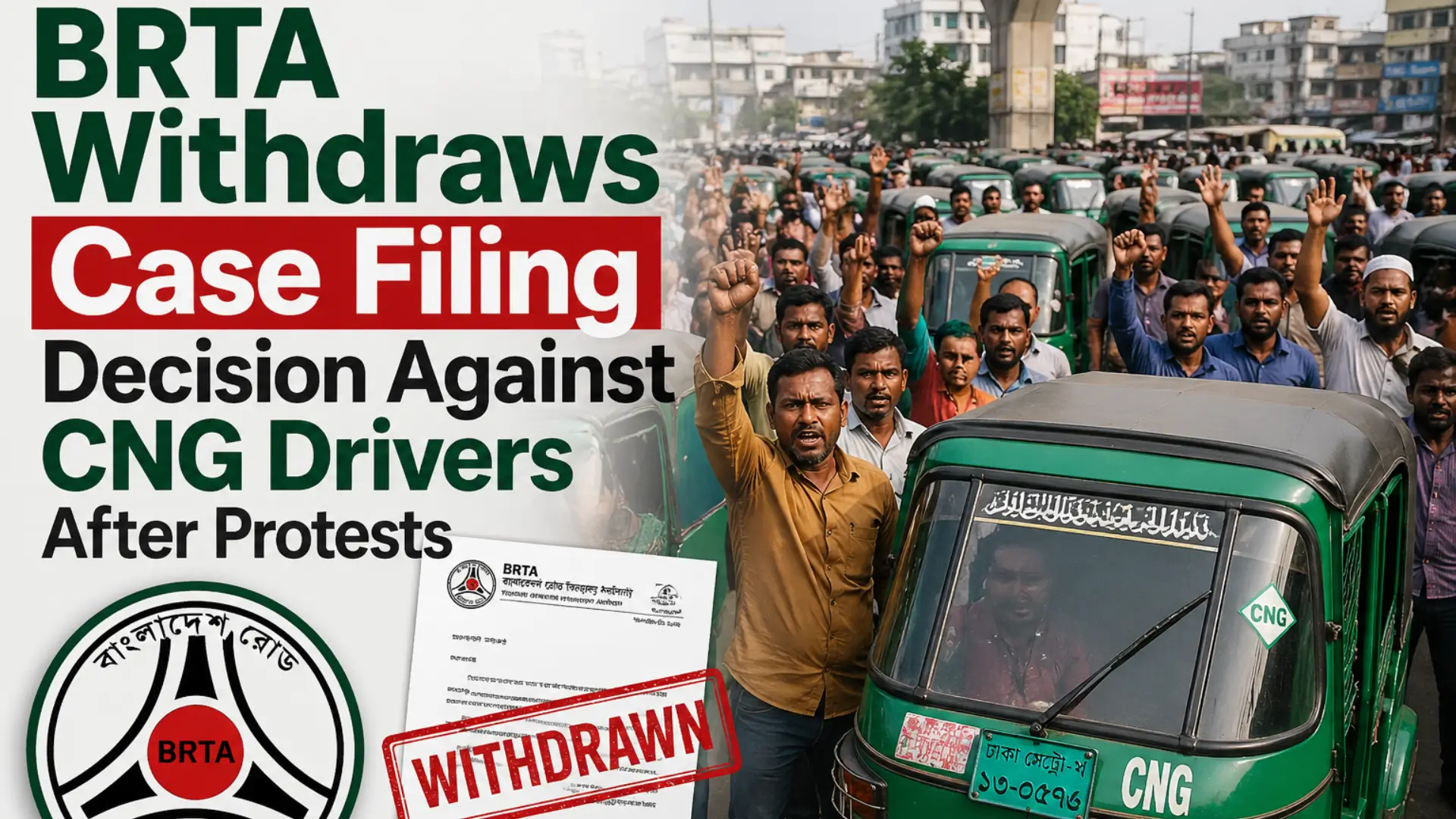
Filing Decision Against CNG Drivers. The Bangladesh Road Transport Authority (BRTA) has officially withdrawn its earlier directive to file cases against CNG-run autorickshaw drivers for overcharging fares. The decision comes after widespread protests by drivers that disrupted traffic and caused difficulties for commuters across the capital, Dhaka.
The move marks a significant shift in the authority’s stance, reflecting the pressure created by public demonstrations and concerns raised by transport workers.
Background of the Controversial Decision
Earlier, on February 10, BRTA had issued a letter to the commissioner of the Dhaka Metropolitan Police (DMP), instructing strict enforcement of fare regulations for autorickshaw drivers.
According to the directive, drivers charging more than the metered fare were to face serious penalties. These included filing legal cases, possible jail terms, and financial fines. The aim of the decision was to ensure fair pricing for passengers and to control widespread complaints of overcharging in the city.
Legal Framework and Penalties
The BRTA’s earlier order was based on Section 35(3) of the Road Transport Act, 2018. This law clearly states that contract carriage drivers must charge fares strictly according to the meter within their permitted areas.
Violations of this regulation could lead to severe consequences, including up to six months of imprisonment, a fine of up to Tk 50,000, or both. Additionally, drivers could receive penalty points on their driving licences, which might affect their ability to continue operating.
These strict measures were introduced to protect passengers and promote transparency in the transport system. However, they also triggered strong reactions from the drivers’ community.

Driver Protests and Public Disruption
The announcement of strict penalties led to immediate backlash from CNG autorickshaw drivers. In response, many drivers took to the streets in protest, blocking major roads in different parts of Dhaka.
The demonstrations began in the morning and quickly escalated, causing significant traffic congestion across the city. Thousands of commuters faced delays and hardships while trying to reach their workplaces, schools, and other destinations.
The protests highlighted the tension between regulatory authorities and transport workers, especially regarding fare control and operational challenges faced by drivers.

BRTA Decision to Withdraw the Order
Following the protests and growing pressure, BRTA decided to step back from its earlier directive. The authority confirmed the withdrawal through an official letter sent to the Dhaka Metropolitan Police.
According to officials, the instruction to file cases against drivers for not adhering to metered fares has been revoked. This decision aims to ease tensions and restore normalcy in the city.
Police authorities also confirmed that the previous order is no longer in effect, and law enforcement agencies will not proceed with case filings under the withdrawn directive.
Impact on Commuters and Transport System
The withdrawal of the order brings immediate relief to CNG drivers, but it also raises questions about fare regulation in Dhaka. Passengers, who often complain about overcharging, may continue to face challenges without strict enforcement.
On the other hand, the decision helps restore traffic flow and reduces disruptions caused by protests. It also opens the door for dialogue between authorities and drivers to find a balanced solution that protects both passengers and transport workers.
Conclusion
The BRTA decision to withdraw its case filing directive highlights the complexities of managing urban transport systems. While the initial order aimed to ensure fair fares and accountability, the strong reaction from drivers demonstrated the need for more inclusive policymaking.
Moving forward, authorities may need to engage with stakeholders, including drivers and commuters, to develop practical solutions that ensure fair pricing without causing unrest. The situation serves as an important reminder of the challenges involved in maintaining order and fairness in a rapidly growing urban environment like Dhaka.